Finding a Surrogate Online: What Intended Parents Should Consider Before Making Contact
By: SurrogateFinder

Online platforms can help intended parents discover potential surrogates beyond their immediate personal network. They can make it easier to compare broad preferences, locations and availability before deciding whether to begin a conversation. The profile is only a starting point, however. A responsible journey still requires respectful communication, professional screening, independent legal advice and careful coordination with a fertility clinic.
Before sending a first message, intended parents should understand what they are looking for, what information a profile can reasonably provide and which questions should wait for qualified medical or legal professionals. This guide explains how to approach that first stage with clarity and respect.
Clarify Your Own Journey Before You Search
A search becomes more useful when intended parents have already discussed the practical shape of their proposed journey. This does not mean every detail must be settled. It means knowing which circumstances are essential, which are preferences and where flexibility is possible.
Where can treatment, pregnancy and birth legally and practically take place?
Has a fertility clinic reviewed the intended parents’ medical plan and embryo status?
Is the journey likely to use the intended parents’ own embryos or donor eggs, sperm or embryos?
What travel, communication and appointment expectations are realistic?
What budget has been set aside for professional, medical, legal, insurance and pregnancy-related costs?
These questions help intended parents avoid approaching someone whose location, expectations or circumstances cannot fit the proposed pathway.
Read a Profile as an Introduction, Not a Screening Report
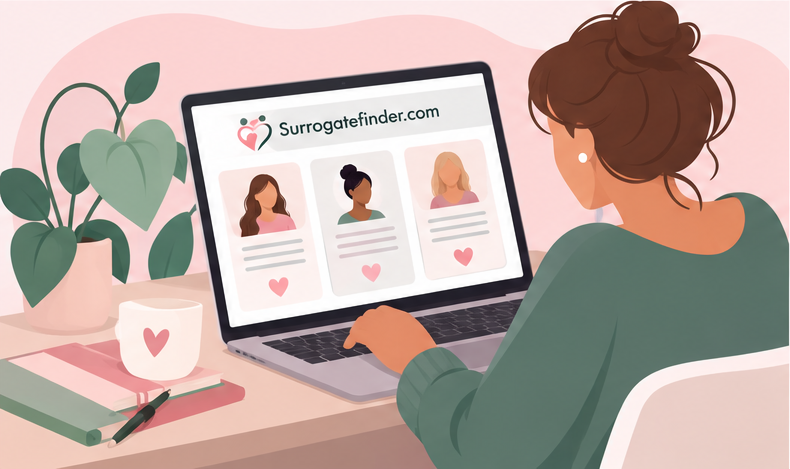
A profile may describe a potential surrogate’s location, family background, motivation, preferences and recent activity. It may help intended parents identify possible compatibility, but it should not be treated as proof of medical suitability or legal readiness. Online matching services do not replace the clinic, counsellor, lawyer or agency professionals required for a properly managed journey.
Some intended parents begin their search online using SurrogateFinder to Find Surrogate Mothers. Profiles can help families identify people they may wish to know better before professional screening and advice begin.
Look for Compatibility Beyond Location
Location matters because it affects clinic access, travel, laws and the practical support available during pregnancy. It is not the only part of a good match. Intended parents should also consider communication style, expectations about contact, views on appointments and pregnancy decisions, support networks, privacy and the relationship everyone hopes to have after birth.
The aim is not to find someone who agrees automatically. It is to identify whether both sides can speak openly, ask difficult questions and respect each other’s boundaries.
Make the First Message Personal and Low Pressure
A first message should introduce the intended parent or parents, explain why the profile stood out and invite a conversation without creating pressure. It should not ask for sensitive medical records, make promises about money or imply that a match has already been made.
Use the person’s name and refer to something specific in the profile.
Share a short, honest description of your family-building journey.
Explain the general location and communication expectations.
Ask whether they would be comfortable having an introductory conversation.
Give them time and space to decide whether to reply.

Protect Privacy and Watch for Warning Signs
Early conversations should remain on the platform until both sides are comfortable and identity has been considered carefully. Intended parents should be cautious about requests for immediate payments, pressure to move off-platform, inconsistent personal information, promises to bypass professional screening, or reluctance to involve a clinic and independent lawyers.
A genuine profile can still belong to someone who is not ultimately suitable for a particular journey. Slowing down when something feels unclear protects both sides.
Move From Conversation to Professional Screening
If the initial conversations are positive, the next step is not embryo transfer or a private financial agreement. A fertility clinic should assess medical suitability. A qualified mental-health professional should support psychosocial preparation. Each side should receive independent legal advice, and the written agreement should be completed before treatment.
Professional guidance commonly addresses pregnancy and medical history, infectious-disease and genetic considerations, informed consent, psychological readiness, independent legal representation, expenses, insurance, decision-making during pregnancy and expectations after birth.
Understand the Rules Where the Journey Will Take Place
Surrogacy law and payment rules differ across countries and, in some places, across states or provinces. In Canada, paying a person to act as a surrogate is prohibited, although eligible out-of-pocket expenditures may be reimbursed when the legal requirements are followed. Intended parents should obtain advice specific to every jurisdiction involved before making commitments.
Questions to Explore Before Agreeing to Match
What does each person hope the relationship will look like during pregnancy and after birth?
Which clinic will complete the medical evaluation and approve treatment?
How will independent counselling and legal representation be arranged?
How will expenses, insurance and unexpected costs be handled?
Who will coordinate appointments, records and communication?
What happens if screening identifies a concern or either side decides not to proceed?
How will privacy, social media and information about the future child be handled?
A Strong Match Develops in Stages
Finding a potential surrogate online can create an important first connection, but no profile or first conversation can answer every question. Intended parents should allow the relationship to develop through respectful communication and professional review. The strongest beginning is one in which both sides feel informed, unpressured and free to decide whether the match is right.